



The CHASE TONE® SECRET T. BOOSTER™ is the most iconic, instant vintage-elusive British Blues & 1970s Americana Rock Tone available. GUARANTEED. 20+yrs strong now.
If you love the CHASE TONE® SECRET PREAMP® for vintage iconic 1970s Echoplex preamp tones, you’ll love the Secret T. Booster for vintage-elusive 1960s & 1970s boost tones.
Designed as a vintage boost for the SECRET PREAMP® or for iconic use on its own.
Hear your guitars like never before into a CLEAN tube amplifier, on the verge of breaking up tube amplifier or into your favorite overdrive.
Higher plain string notes on the fretboard distort more than lower wound string notes allowing solos to pop out of the mix like the old records.
Hand Finished in 1960s style English SILVER HAMMERTONE w/slight BLUE HUE & then oven baked. Hand screened w/true black ink & then oven baked, again.
Ceramic capacitors that have a natural vibration when voltage is applied much like airy, open 1959 – 1960 Gibson Les Paul PAF pickups allowing controlled feedback at even low volumes. Custom Made Silicon Transistors for Silky Highs.
In 1960s London, a deceptively simple device would iconically reshape the sound of rock and roll. Not a distortion pedal in the modern sense — but a midrange & treble-focused signal booster, designed to cut through the murky low-end response of tube amplifiers and coax them into singing with clarity and harmonic richness. Built around a single transistor, the circuit is elegantly minimal: a handful of components, a 9-volt battery, and a single control knob. Yet in the right hands, it may be one of the most consequential pieces of gear in electric guitar history.
This circuit finds its iconic home in the rigs of pro players amplifying searing British blues driven tones into glorious, compressed emotional overdrive & brilliant natural wood instrument cleans. It doesn’t just boost the signal — it draws closer the relationship between the player, guitar and amplifier into something greater than the sum of its parts.
What makes the sound so revered — and so difficult to replicate faithfully — is the simplicity of its analog design. There’s barely anything between your guitar and amplifier, unlike the modern highly processed signals that have come to dominate. Simple vintage circuits allow each wood instrument to sing with its own character, frequency response, gain profile… its own voice. Vintage prized pieces are now rare artifacts, commanding serious collector prices and inspiring decades of electric guitarists striving to recreate what has been lost to time. The pursuit of that elusive treble warmth — that particular compression and harmonic bloom — has driven luthiers, engineers, and tone obsessives mad ever since. An analog boost rooted in minimalist design secretly used to drive amplifiers on records without telling anyone, and that is precisely what makes it immortal.
The vintage approach needs no channel switching. Roll back your guitar’s volume for clean, woody tones — roll it up for natural overdrive. It’s that simple, and that musical. Ideal for guitarists who use their guitar controls to wring vintage tone out of their rig.
Dial in a clean rhythm tone rolling back the guitar volume for traditional chords, then push the guitar volume for singing lead glass slide solo overdrive. Or use your Gibson’s pickup selector as an instant channel switch — neck pickup preset for cleans, bridge pickup for immediate grit.
Position the Secret T. Booster near first in your signal chain, before any buffers, (experiment before or after Fuzz Face style pedals) to preserve the full dynamic interaction between the pedal and your guitar’s controls via the low input impedance which warms the signal.
On the Boost knob: lower settings yield fatter, warmer character by design. There’s no need to push the top end if the music doesn’t call for it. Color the sound without the boost.
The Secret T. Booster is voiced around the iconic frequencies of the ’60s and ’70s — the vintage tones that defined the records. Explore alternate tunings to unlock new dimensions: Drop D, or drop the A string to G. Try Both at the same time. This pedal rewards experimentation.
Rolling back a Fender’s volume control yields chewy, twangy vintage tones due to the vintage low input impedance and custom tuned circuitry.
Viola Clef (UP) –

Thick, warm midrange focus with a smooth top end and bass cut. Plug in and play — requires minimal guitar volume or tone adjustments. Treble warmth for both Gibson and Fender guitars.
Treble Clef (CENTER) –

The stock mid-1960s British boost heard on countless recordings. Musical top-end bite that cuts through the mix. Carefully fine-tuned to capture the original feel and tone of the era — vintage-authentic to the era. Think: Blues Breakers with Eric Clapton, 1966.
Bass Clef (DOWN) –

“What If” Mode Full-range boost with only a slight bass cut due to vintage 1950s-1960s style Half Dollar Sized Ceramic Capacitor much like the vintage Fender Stratocasters used. The capacitance varies with voltage giving a dynamic feel to the wound strings since the circuit is now not cutting as much bass. Allows the amplifier to clip on hard pick attacks even at low volume, unlocking tones that never existed before — while still honoring the iconic vintage character at its core. This setting benefits from utilizing the guitar volume controls slightly rolled back especially on Gibsons. For the first time, you’ll hear the full range clarity of your individual precious Gibson & Fender instrument.
Capacitors
Vintage-spec new-production ceramic disc capacitors — chosen specifically for the original ’60s and ’70s circuit’s tonal character. After nearly 30 years of building, I can usually tell the sound of a capacitor by holding it in my hands. The capacitor choice can be everything. Ceramic preserves the natural low-frequency and midrange spectrum of the instrument without coloring or garbling the signal. In an A/B comparison, the difference is immediately audible in the top end — an airy, clear tone that responds beautifully to guitar volume rollback. The artists I work with consistently reach for this character when chasing the elusive tones of the vintage recordings they grew up on allowing them to milk the natural tones out of their guitar by working the controls.
Transistors
1960s/70s-style hand-selected, cherry-picked, CUSTOM MADE silicon transistors — modified and voiced to iconically capture the sound and feel of the era’s recordings. Low noise, temperature stable, and free from the instability and cost issues of original germanium units.
Includes an analog trick of simulating germanium collector-to-base leakage current feel — delivering natural compression and pickup loading that eases off as you roll back the guitar volume, revealing the full texture of the fretboard and the wood beneath the strings.
Resistors
New-production carbon film resistors fine-tuned to accurate vintage spec values — capturing the tonal qualities of vintage resistors with the consistency and lower noise floor of modern film construction. Much has been debated in gear circles about our use of aged carbon film resistors. What’s lost in our past translations is the vintage gear we’ve had go through our hands rarely ever, if ever, match up to vintage schematics. The resistors regularly measure quite high in value (100Ks often measure 108K to 114K on average with some ceramic varieties used in 1960s England measuring 140K to 160K for example) and capacitors often measure lower especially silvered ceramic capacitors while ceramic disc capacitors much higher.
All New products are covered by the manufacturers new warranty. Please check their website for the length of warranty and warranty conditions. If an item you receive is faulty get in touch with us ASAP. Second Hand products come with a 4 week warranty from us. If there is an issue let us know ASAP! This covers normal use and does not cover accidental damage, misuse, wrong power plugged into it, modding, water damage or any other damage caused by mistreatment. Just treat it nice and all will be good!
We send A LOT of packages every week so don't worry about the shipping side of things!
We've never lost a thing and your awesome new gear will be packed up really well to avoid any damage in transit.
If your order comes in before 2pm we will ship it same day. Most of the time we pack things up all the way to 4pm so just call if you need it to leave same day after 2pm.
We ship mainly with Australia Post but may use a courier depending on location and size of the package.
Free Post ships with Australia Post standard and expected shipping times are between 4-6 business days depending on location. It will be longer to outside of metro and rural areas.
Express Post will usually be with you next business day in metro areas of QLD, NSW, SA, VIC and TAS. WA will take 2 days to metro and extra days after that to out side metro and rural areas.
Everything we ship has a tracking number with the exception of some power cables and smaller envelope packages. You will be emailed tracking once your order has been shipped!
The CHASE TONE® SECRET T. BOOSTER™ is the most iconic, instant vintage-elusive British Blues & 1970s Americana Rock Tone available. GUARANTEED. 20+yrs strong now.
If you love the CHASE TONE® SECRET PREAMP® for vintage iconic 1970s Echoplex preamp tones, you’ll love the Secret T. Booster for vintage-elusive 1960s & 1970s boost tones.
Designed as a vintage boost for the SECRET PREAMP® or for iconic use on its own.
Hear your guitars like never before into a CLEAN tube amplifier, on the verge of breaking up tube amplifier or into your favorite overdrive.
Higher plain string notes on the fretboard distort more than lower wound string notes allowing solos to pop out of the mix like the old records.
Hand Finished in 1960s style English SILVER HAMMERTONE w/slight BLUE HUE & then oven baked. Hand screened w/true black ink & then oven baked, again.
Ceramic capacitors that have a natural vibration when voltage is applied much like airy, open 1959 – 1960 Gibson Les Paul PAF pickups allowing controlled feedback at even low volumes. Custom Made Silicon Transistors for Silky Highs.
In 1960s London, a deceptively simple device would iconically reshape the sound of rock and roll. Not a distortion pedal in the modern sense — but a midrange & treble-focused signal booster, designed to cut through the murky low-end response of tube amplifiers and coax them into singing with clarity and harmonic richness. Built around a single transistor, the circuit is elegantly minimal: a handful of components, a 9-volt battery, and a single control knob. Yet in the right hands, it may be one of the most consequential pieces of gear in electric guitar history.
This circuit finds its iconic home in the rigs of pro players amplifying searing British blues driven tones into glorious, compressed emotional overdrive & brilliant natural wood instrument cleans. It doesn’t just boost the signal — it draws closer the relationship between the player, guitar and amplifier into something greater than the sum of its parts.
What makes the sound so revered — and so difficult to replicate faithfully — is the simplicity of its analog design. There’s barely anything between your guitar and amplifier, unlike the modern highly processed signals that have come to dominate. Simple vintage circuits allow each wood instrument to sing with its own character, frequency response, gain profile… its own voice. Vintage prized pieces are now rare artifacts, commanding serious collector prices and inspiring decades of electric guitarists striving to recreate what has been lost to time. The pursuit of that elusive treble warmth — that particular compression and harmonic bloom — has driven luthiers, engineers, and tone obsessives mad ever since. An analog boost rooted in minimalist design secretly used to drive amplifiers on records without telling anyone, and that is precisely what makes it immortal.
The vintage approach needs no channel switching. Roll back your guitar’s volume for clean, woody tones — roll it up for natural overdrive. It’s that simple, and that musical. Ideal for guitarists who use their guitar controls to wring vintage tone out of their rig.
Dial in a clean rhythm tone rolling back the guitar volume for traditional chords, then push the guitar volume for singing lead glass slide solo overdrive. Or use your Gibson’s pickup selector as an instant channel switch — neck pickup preset for cleans, bridge pickup for immediate grit.
Position the Secret T. Booster near first in your signal chain, before any buffers, (experiment before or after Fuzz Face style pedals) to preserve the full dynamic interaction between the pedal and your guitar’s controls via the low input impedance which warms the signal.
On the Boost knob: lower settings yield fatter, warmer character by design. There’s no need to push the top end if the music doesn’t call for it. Color the sound without the boost.
The Secret T. Booster is voiced around the iconic frequencies of the ’60s and ’70s — the vintage tones that defined the records. Explore alternate tunings to unlock new dimensions: Drop D, or drop the A string to G. Try Both at the same time. This pedal rewards experimentation.
Rolling back a Fender’s volume control yields chewy, twangy vintage tones due to the vintage low input impedance and custom tuned circuitry.
Viola Clef (UP) –
Thick, warm midrange focus with a smooth top end and bass cut. Plug in and play — requires minimal guitar volume or tone adjustments. Treble warmth for both Gibson and Fender guitars.
Treble Clef (CENTER) –
The stock mid-1960s British boost heard on countless recordings. Musical top-end bite that cuts through the mix. Carefully fine-tuned to capture the original feel and tone of the era — vintage-authentic to the era. Think: Blues Breakers with Eric Clapton, 1966.
Bass Clef (DOWN) –
“What If” Mode Full-range boost with only a slight bass cut due to vintage 1950s-1960s style Half Dollar Sized Ceramic Capacitor much like the vintage Fender Stratocasters used. The capacitance varies with voltage giving a dynamic feel to the wound strings since the circuit is now not cutting as much bass. Allows the amplifier to clip on hard pick attacks even at low volume, unlocking tones that never existed before — while still honoring the iconic vintage character at its core. This setting benefits from utilizing the guitar volume controls slightly rolled back especially on Gibsons. For the first time, you’ll hear the full range clarity of your individual precious Gibson & Fender instrument.
Capacitors
Vintage-spec new-production ceramic disc capacitors — chosen specifically for the original ’60s and ’70s circuit’s tonal character. After nearly 30 years of building, I can usually tell the sound of a capacitor by holding it in my hands. The capacitor choice can be everything. Ceramic preserves the natural low-frequency and midrange spectrum of the instrument without coloring or garbling the signal. In an A/B comparison, the difference is immediately audible in the top end — an airy, clear tone that responds beautifully to guitar volume rollback. The artists I work with consistently reach for this character when chasing the elusive tones of the vintage recordings they grew up on allowing them to milk the natural tones out of their guitar by working the controls.
Transistors
1960s/70s-style hand-selected, cherry-picked, CUSTOM MADE silicon transistors — modified and voiced to iconically capture the sound and feel of the era’s recordings. Low noise, temperature stable, and free from the instability and cost issues of original germanium units.
Includes an analog trick of simulating germanium collector-to-base leakage current feel — delivering natural compression and pickup loading that eases off as you roll back the guitar volume, revealing the full texture of the fretboard and the wood beneath the strings.
Resistors
New-production carbon film resistors fine-tuned to accurate vintage spec values — capturing the tonal qualities of vintage resistors with the consistency and lower noise floor of modern film construction. Much has been debated in gear circles about our use of aged carbon film resistors. What’s lost in our past translations is the vintage gear we’ve had go through our hands rarely ever, if ever, match up to vintage schematics. The resistors regularly measure quite high in value (100Ks often measure 108K to 114K on average with some ceramic varieties used in 1960s England measuring 140K to 160K for example) and capacitors often measure lower especially silvered ceramic capacitors while ceramic disc capacitors much higher.
All New products are covered by the manufacturers new warranty. Please check their website for the length of warranty and warranty conditions. If an item you receive is faulty get in touch with us ASAP. Second Hand products come with a 4 week warranty from us. If there is an issue let us know ASAP! This covers normal use and does not cover accidental damage, misuse, wrong power plugged into it, modding, water damage or any other damage caused by mistreatment. Just treat it nice and all will be good!
We send A LOT of packages every week so don't worry about the shipping side of things!
We've never lost a thing and your awesome new gear will be packed up really well to avoid any damage in transit.
If your order comes in before 2pm we will ship it same day. Most of the time we pack things up all the way to 4pm so just call if you need it to leave same day after 2pm.
We ship mainly with Australia Post but may use a courier depending on location and size of the package.
Free Post ships with Australia Post standard and expected shipping times are between 4-6 business days depending on location. It will be longer to outside of metro and rural areas.
Express Post will usually be with you next business day in metro areas of QLD, NSW, SA, VIC and TAS. WA will take 2 days to metro and extra days after that to out side metro and rural areas.
Everything we ship has a tracking number with the exception of some power cables and smaller envelope packages. You will be emailed tracking once your order has been shipped!
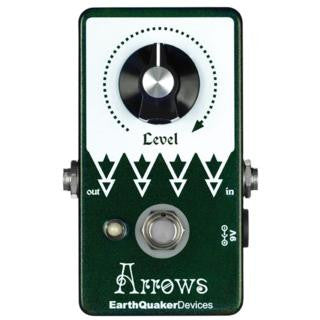
The Arrows is an all-discrete tone sculpting preamp booster. It was designed with the intention of adding an additional channel of gain to all your...
View full details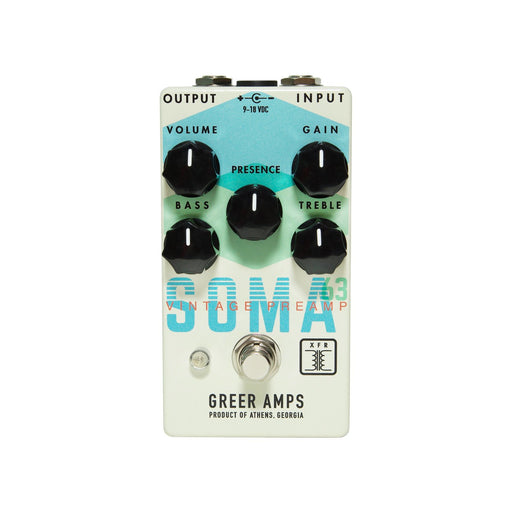
A brave new world of tone, the SOMA ‘63 Vintage Preamp is the first pedal in the XFR series of pedals from Greer Amps. The SOMA ’63 is a true vint...
View full details